
Storage Tips
- Wash your hands before pumping or handling human milk. If you are using a pump, make sure your pump, pump parts, and bottle or collection cups are clean. Hot soapy water is generally all that’s needed. However, there may be instances where sanitizing is necessary (e.g., first use, premature baby, a baby with medical needs, a baby less than 4 months old). Please see your pump’s manufacturer guidelines for specific cleaning instructions.
- Use clean, food-grade, and freezer safe storage containers. This can be disposable milk storage bags, silicone milk containers or trays, bottles, or small plastic or glass containers.
- To avoid discarding unused milk, consider storing small quantities or varying amounts depending on your baby’s age and eating habits. For example, you might store 1-2 ounces per container. Alternatively, have a few containers that are 1 ounce, 2 ounces, or 3 ounces each. This prevents waste, but smaller quantities are easier and faster to thaw.
- It can be helpful to label your container with the date and time that the milk was collected. If you’re baby is in childcare or the hospital, be sure to write their name on the container.
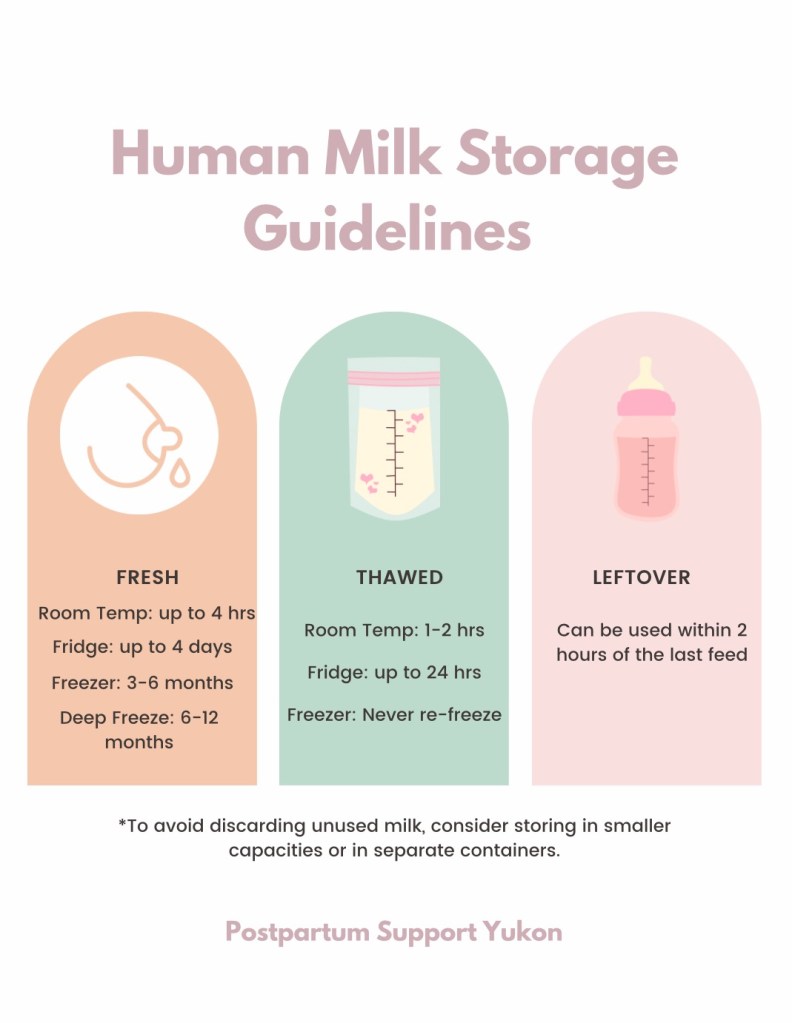
Storage Guidelines
| Storage Location | Temperature | Maximum Storage Time |
|---|---|---|
| Room Temperature | 16–25°C | Up to 4 hours. 6-8 hours depending on temperature & cleanliness of the collection process. |
| Refrigerator | 0–4°C | Up to 5 days |
| Freezer (Refrigerator) | Below 0°C | Up to 6 months (best within 3 months) |
| Deep Freezer | Below 0°C | Up to 12 months, but 6 months is best. |
| Thawed Milk (room temp) | 16–25°C | Use within 1-2 hours (do not refreeze) |
| Thawed Milk (refrigerator) | 0–4°C | Use within 24 hours (do not refreeze) |
| Leftover Milk (has touched your baby’s mouth) | 16–25°C | Discard within 1-2 hours. |
* If you don’t plan on using your milk right away, refrigerate or freeze expressed milk as soon as possible.
Thawing Human Milk
- Use the “first in, first out” method. The milk that was put in the fridge or freezer first, should be used first.
- If you’re preparing refrigerated milk, there’s no need to warm it unless your baby prefers warmed milk. You can use a bottle warmer as per the manufacturer’s directions, or place the refrigerated milk container in some warm water.
- For frozen milk, defrost in the fridge overnight. If you need the milk soon, but not right away, you can place the frozen milk container in some cold water in the fridge. If you need the milk right away, place the frozen milk container in some warm water. You may need to dump the water as it cools and replace it with new warm water.
- Swirl or shake to mix and distribute heat before feeding it to your baby.
- Do not use a microwave to heat up human milk. It may create hot spots that can burn your baby’s mouth and throat. It may also destroy nutrients and immunological properties.
 Postpartum Support Yukon